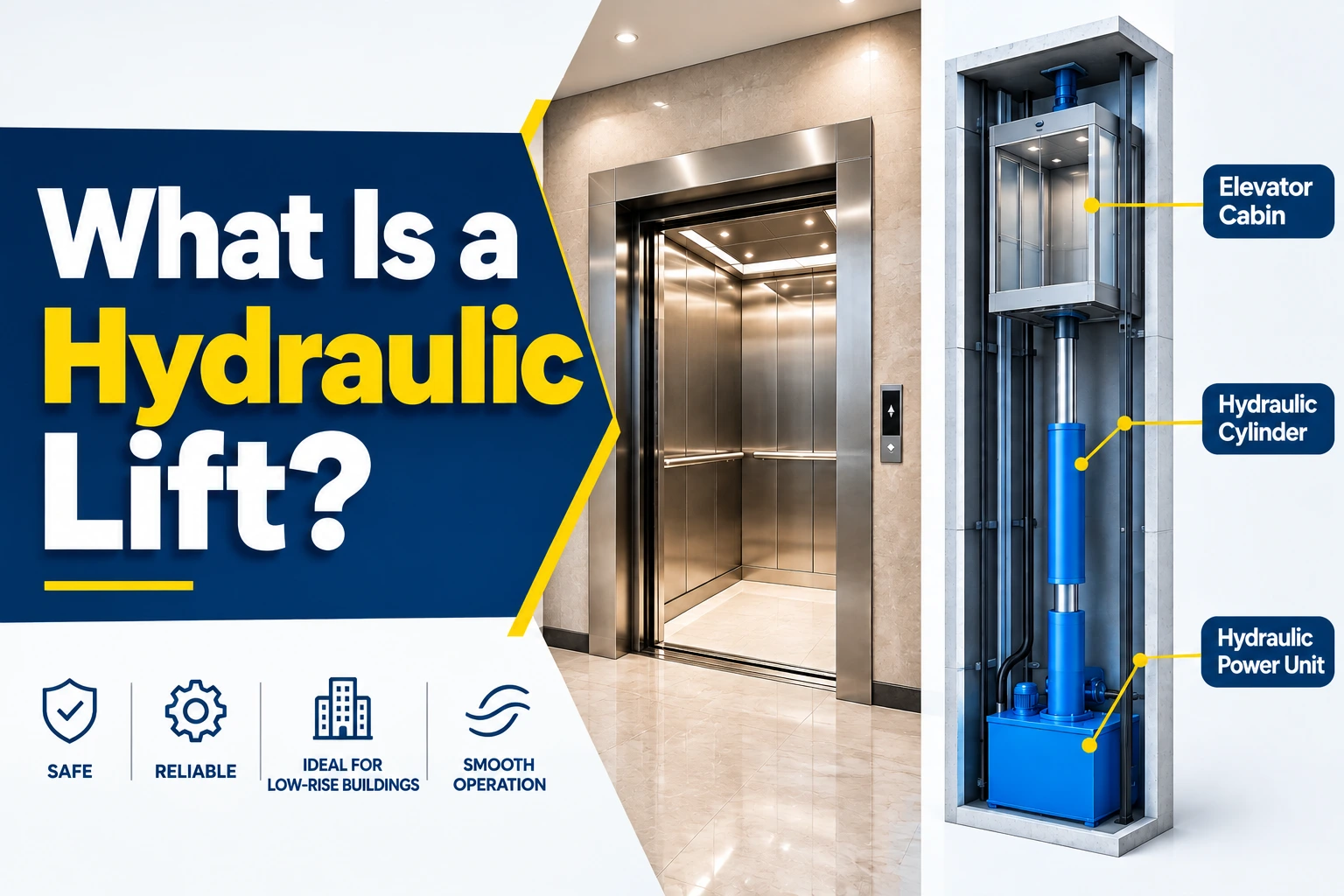
A hydraulic lift is an elevator that uses hydraulic pressure to move its cabin between floors. Unlike traction elevators, hydraulic lifts use a hydraulic pump, cylinder, piston, and hydraulic fluid to create movement.
Today, hydraulic lifts serve many homes, villas, commercial buildings, hospitals, warehouses, and factories. They offer smooth movement and can handle different load requirements. Therefore, they can work well for many low-rise buildings.
How Does a Hydraulic Lift Work?
A hydraulic lift uses pressurized fluid to move a piston inside a cylinder.
First, when a passenger selects a floor, the control system activates the hydraulic pump. The pump then pushes hydraulic fluid into the cylinder. As pressure builds inside the cylinder, the piston moves upward and raises the elevator cabin.
When the lift needs to move down, the control valve releases the hydraulic fluid in a controlled manner. As a result, the cabin moves downward smoothly and reaches the selected floor safely.
Main Components of a Hydraulic Lift
A hydraulic elevator has several important components that work together for smooth operation.
- Hydraulic Pump – Creates the pressure needed to move the elevator.
- Hydraulic Cylinder – Contains the hydraulic fluid and piston.
- Piston – Moves upward and downward to raise or lower the lift cabin.
- Hydraulic Fluid Reservoir – Stores the hydraulic fluid used by the system.
- Control Valve – Regulates the flow of hydraulic fluid.
- Electric Motor – Powers the hydraulic pump.
- Control System – Controls floor selection, movement, door operation, and leveling.
- Safety System – Supports safe elevator operation through suitable safety devices and controls.
Benefits of Hydraulic Lifts
Hydraulic lifts offer several benefits for suitable residential, commercial, and industrial applications.
Smooth Operation
Hydraulic systems provide controlled movement during starting and stopping. Therefore, passengers can enjoy a comfortable elevator ride.
Good Load Capacity
Hydraulic technology can handle different load requirements. For this reason, many commercial and industrial applications consider hydraulic lifting systems.
Suitable for Low-Rise Buildings
Hydraulic lifts work particularly well in many low-rise buildings. They can serve homes, offices, shops, and other properties where the required travel distance suits the system.
Flexible Design
Moreover, hydraulic lifts offer different design possibilities. Owners can select cabin finishes, lighting, flooring, doors, and other interior options according to their requirements.
Where Are Hydraulic Lifts Used?
Hydraulic lifts have applications across several types of properties.
Residential Buildings: Homeowners can use hydraulic lifts in villas, duplexes, and other low-rise homes for convenient movement between floors.
Commercial Buildings: Offices, shops, hotels, and other commercial properties can use hydraulic elevators according to their space and usage requirements.
Hospitals: Hospitals may use suitable hydraulic elevator systems for passenger and service movement when the design meets the required technical and safety conditions.
Warehouses and Factories: Industrial facilities can use hydraulic lifting systems to move goods and materials between different levels.
Hydraulic Lift vs. Traction Lift
Hydraulic and traction elevators use different methods to move their cabins.
A hydraulic lift uses hydraulic pressure, a pump, fluid, cylinder, and piston. In contrast, a traction lift generally uses an electric motor, ropes, traction sheave, and counterweight or another suitable arrangement.
Therefore, the right elevator depends on several factors, including building height, load capacity, available space, daily usage, energy requirements, and budget.
What Should You Consider Before Installing a Hydraulic Lift?
Before choosing a hydraulic lift, consider the building’s specific requirements. These include the number of floors, required load capacity, shaft dimensions, available installation space, power supply, safety requirements, and expected usage.
In addition, a professional elevator company can inspect the site and recommend a suitable elevator system. This approach helps property owners choose equipment that matches their building and operational needs.
Every building comes with its own specific elevator requirements. Our team can help you evaluate factors such as the number of floors, load capacity, available space, design preferences, and intended use before selecting an appropriate elevator solution.
Hydraulic Lift Maintenance
Regular maintenance helps keep a hydraulic lift reliable and efficient. During maintenance, technicians can check the hydraulic fluid, pump, cylinder, piston, valves, doors, control system, leveling, and safety components.
Furthermore, regular inspections can help identify potential problems before they affect elevator performance. Following the manufacturer’s maintenance recommendations also helps support long-term operation.
Why Choose Kaibex Elevator?
Kaibex Elevator provides elevator solutions for residential, commercial, and industrial applications. Our product range includes home lifts, passenger elevators, hospital lifts, capsule lifts, freight elevators, glass lifts, and other elevator solutions.
We focus on understanding each project’s requirements before recommending an elevator. Our team considers factors such as building height, load capacity, available space, design preferences, and intended application.
Whether you need a hydraulic lift for a home, office, commercial property, hospital, warehouse, or industrial facility, Kaibex Elevator can help you explore a suitable solution.
Conclusion
A hydraulic lift uses hydraulic pressure to move an elevator cabin between floors. Its smooth operation, good load capacity, and flexible design make it a practical option for many low-rise applications.
However, every project has different requirements. Therefore, property owners should consider building height, load capacity, available space, usage, and safety requirements before selecting an elevator.
If you are planning to install a hydraulic lift, contact Kaibex Elevator to discuss your requirements and explore suitable elevator solutions.